
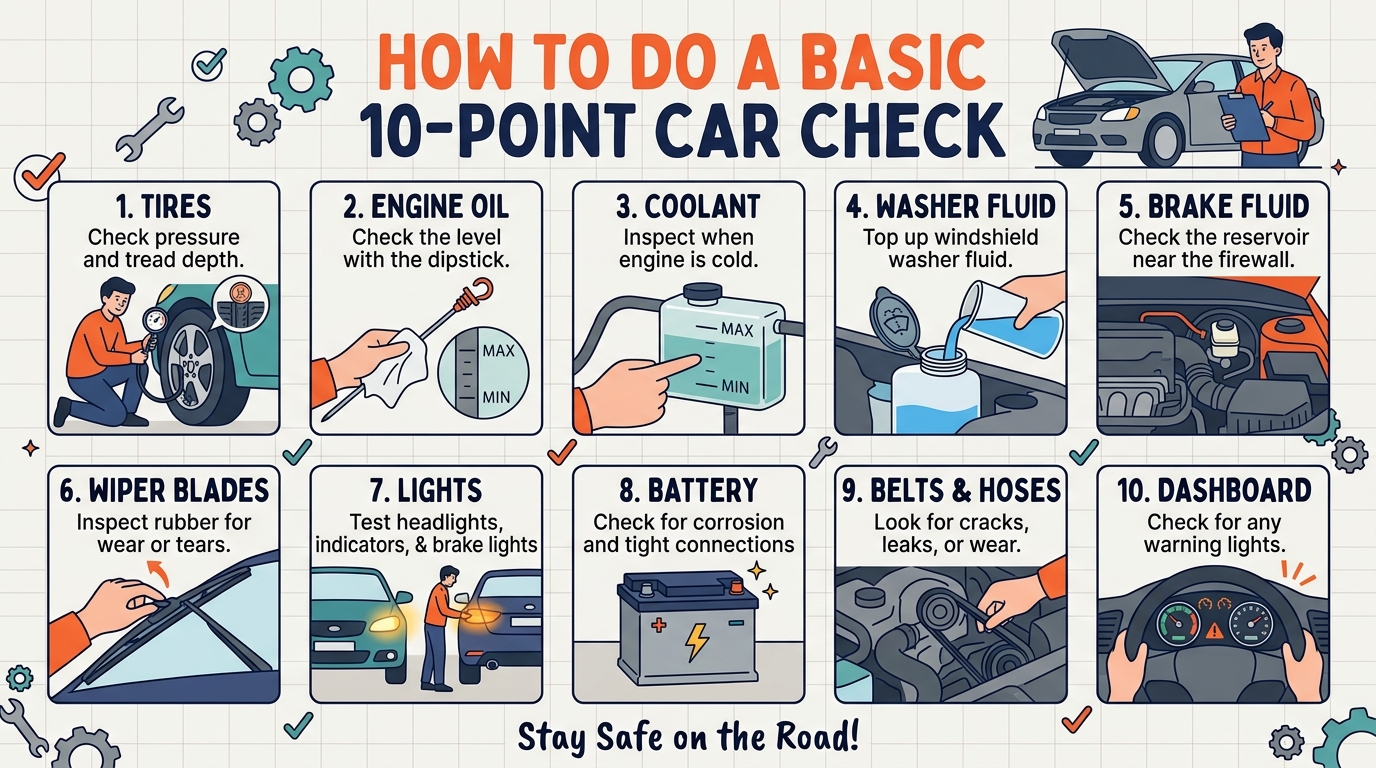
“Ensuring your car is in top condition is essential for both safety and performance. With a basic 10-point car check, you can easily identify potential issues before they become major problems, saving you time and money in the long run. In this guide, we will walk you through the simple steps to conduct a thorough inspection of your vehicle, empowering you to drive with confidence and peace of mind. Let’s get started!”
Engine Oil Level
Checking the engine oil level regularly is crucial for maintaining the health of your vehicle’s engine. Low oil levels can lead to increased friction and overheating, potentially causing serious damage. To check the oil level, park your car on a level surface, wait for the engine to cool down, and locate the oil dipstick. Pull out the dipstick, wipe it clean, reinsert it fully, and then pull it out again to see the oil level. The oil level should fall between the minimum and maximum markers on the dipstick. If it’s below the minimum mark, you need to add more oil to prevent engine problems.
It’s recommended to check your engine oil level at least once a month or before long trips. Be sure to use the type of oil specified in your vehicle’s manual and consult a mechanic if you notice a significant decrease in oil levels between checks. Regular maintenance of your engine oil level will help ensure your engine runs smoothly and efficiently for years to come.
Coolant Level
Coolant is essential for maintaining the proper operating temperature of your vehicle’s engine. It helps prevent overheating and ensures that the engine runs efficiently. To check the coolant level, make sure the engine is cool before opening the hood. Locate the coolant reservoir, which is typically a translucent plastic tank with level markings on the side.
Check the coolant level against the markings on the reservoir. If the level is below the minimum mark, you will need to add more coolant. Use a mixture of coolant and water as recommended by the manufacturer. It’s important to use the correct type of coolant for your vehicle to prevent damage to the cooling system. Regularly checking and maintaining the coolant level will help keep your engine running smoothly and prevent costly repairs.
Brake Fluid Level
Checking the Brake Fluid Level: Brake fluid is a critical component of your vehicle’s braking system, as it helps transfer the force from the brake pedal to the brake pads. To check the brake fluid level, locate the brake fluid reservoir under the hood of your car. The reservoir is usually translucent, allowing you to see the fluid level without opening it.
Importance of Maintaining Proper Brake Fluid Level: It is essential to ensure that the brake fluid level is within the recommended range at all times. Low brake fluid can lead to decreased braking performance and potential safety hazards. If you notice the brake fluid level is low, it may indicate a leak in the system that needs to be addressed immediately by a qualified mechanic. Regularly checking and maintaining the brake fluid level is crucial for the overall safety and performance of your vehicle.
5. Tire Pressure
Checking and maintaining proper tire pressure is crucial for ensuring safety, extending tire life, and optimizing fuel efficiency. Incorrect tire pressure can lead to uneven wear, reduced traction, poor handling, and even blowouts. To determine the correct tire pressure for your vehicle, refer to the owner’s manual or the sticker located on the driver’s side door jamb.
Use a reliable tire pressure gauge to check the pressure when the tires are cold, as heat from driving can increase pressure readings. If the pressure is too low, add air until it reaches the recommended PSI (pounds per square inch). Conversely, if the pressure is too high, release air to reach the correct level. Remember to check the spare tire as well, as it is often overlooked but essential in emergencies.
Lights and Signals
Lights and signals are crucial for safe driving as they help you see the road clearly and communicate with other drivers. Regularly check all exterior lights, including headlights, taillights, brake lights, turn signals, and hazard lights. Replace any bulbs that are burnt out to ensure optimal visibility on the road.
Additionally, make sure to test your vehicle’s high beams, low beams, and fog lights to ensure they are working properly. Check the alignment of your headlights to avoid blinding oncoming drivers. Finally, inspect your vehicle’s signals, such as the horn and indicators, to ensure they are functioning correctly to alert other drivers of your intentions on the road.
Conclusion
Ensuring regular maintenance of your vehicle is crucial for both safety and performance. By routinely checking and maintaining engine oil, coolant, brake fluid, tire pressure, lights, and signals, you can prevent potential issues and prolong the lifespan of your vehicle. Neglecting these basic maintenance tasks can lead to costly repairs, accidents, and breakdowns.
Remember to follow the manufacturer’s guidelines for maintenance schedules and procedures. If you notice any irregularities during your checks, it’s important to address them promptly. By staying proactive and attentive to your vehicle’s maintenance needs, you can enjoy a smoother and safer driving experience for years to come.