
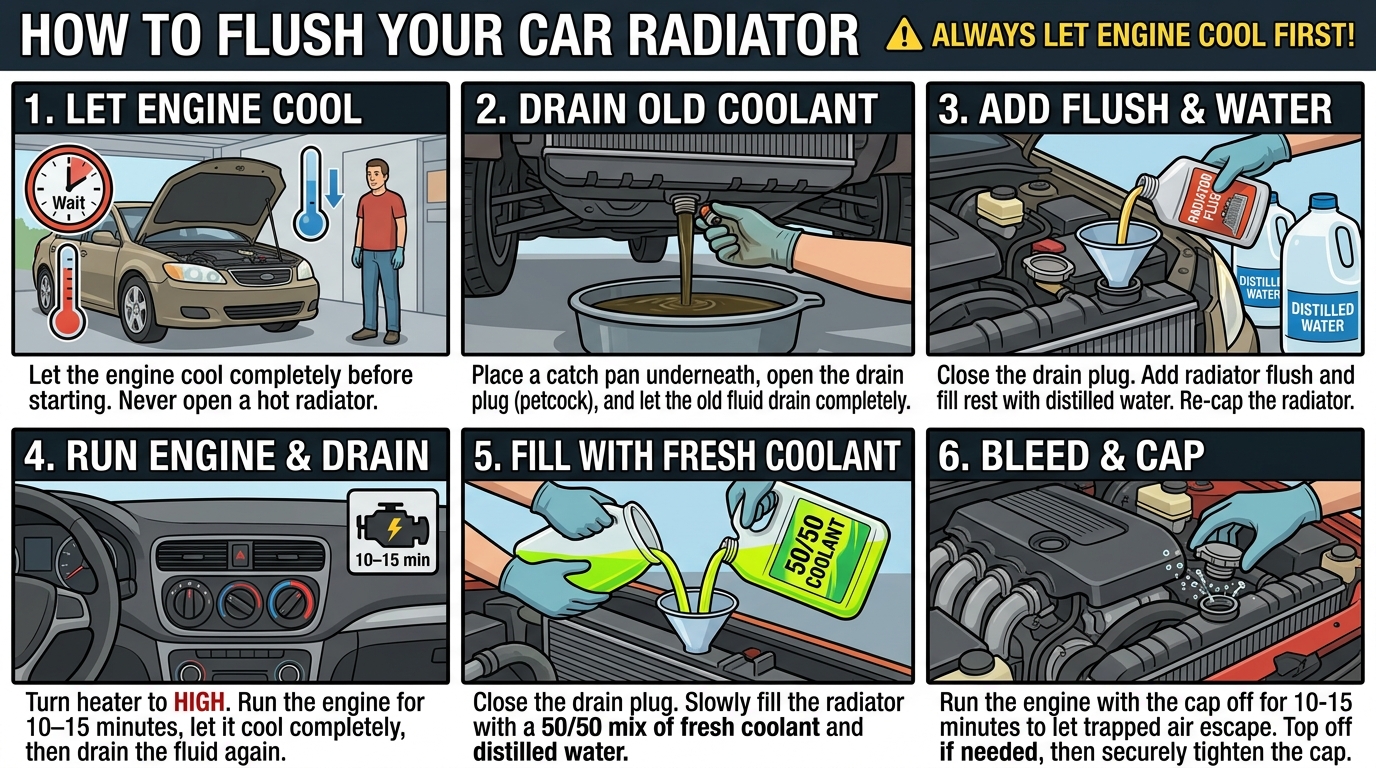
Learn the simple yet crucial steps to keep your vehicle running smoothly and efficiently by mastering the art of flushing your radiator. Discover the key benefits of this routine maintenance task and ensure your engine stays cool and performs at its best. Stay tuned for expert tips and guidance on how to effectively flush your radiator and prolong the life of your vehicle.
Signs Your Radiator Needs Flushing
Overheating: One of the most common signs that your radiator needs flushing is if your engine is frequently overheating. A buildup of sediment and debris in the radiator can hinder the cooling process, leading to overheating issues.
Discolored Coolant: If you notice that the coolant in your radiator is discolored or rusty-looking, it may be a sign that it’s time for a flush. This discoloration can indicate the presence of rust or other contaminants that can affect the efficiency of your cooling system.
Low Coolant Levels: Constantly needing to top up your coolant reservoir could be a sign that there is a leak or blockage in your radiator. Flushing the radiator can help remove any blockages and ensure proper coolant circulation.
Tools and Materials Needed
When flushing your radiator, it is essential to have the right tools and materials on hand to ensure the process goes smoothly and efficiently. Some of the basic tools you will need include a pair of safety goggles, gloves, a funnel, a bucket or drain pan, a wrench, and a hose for water supply. Safety goggles and gloves are crucial to protect yourself from any splashes or spills of hot radiator fluid. A wrench will help you remove the petcock or drain plug to let the coolant drain out.
In addition to tools, you will also need specific materials for the flushing process. This includes a radiator flush solution, distilled water, and new coolant. The radiator flush solution helps to remove any built-up rust, scale, or debris inside the radiator. Distilled water is preferred over tap water as it doesn’t contain minerals that could potentially harm your radiator. Finally, having new coolant ready ensures that you can refill your radiator with fresh coolant after the flushing process is complete, helping to maintain your radiator’s performance and longevity.
Step-by-Step Guide to Flushing Your Radiator
Flushing your radiator is a crucial maintenance task that helps keep your vehicle’s cooling system in optimal condition. Follow these steps to properly flush your radiator:
Step 1: Make sure the engine is completely cool before starting the flushing process. This is essential to prevent any burns or injuries.
Step 2: Locate the radiator drain plug at the bottom of the radiator and place a drain pan underneath to catch the coolant.
Step 3: Open the drain plug and allow the old coolant to drain completely. You may need to remove the radiator cap to facilitate the draining process.
Step 4: Once all the coolant has drained, close the drain plug securely and dispose of the old coolant properly according to local regulations.
Step 5: Prepare a mixture of coolant and water as per your vehicle manufacturer’s recommendations. Slowly pour the mixture into the radiator until it reaches the recommended level.
Step 6: Replace the radiator cap, start the engine, and let it run for a few minutes to ensure proper circulation of the new coolant mixture. Check for any leaks and top up the coolant as needed.
Tips for Maintaining a Healthy Radiator
Regular Inspections: To maintain a healthy radiator, it is essential to conduct regular inspections. Check for any leaks, rust, or debris that may be affecting the performance of your radiator. Catching any issues early can prevent more significant problems down the line.
Keep Coolant Levels Topped Up: Ensure that your radiator always has the proper level of coolant. Low coolant levels can lead to overheating and damage to your engine. Check the coolant levels regularly and top up as needed to keep your radiator running smoothly.
Clean the Exterior: Dust, dirt, and debris can accumulate on the exterior of your radiator, hindering its ability to dissipate heat efficiently. Regularly clean the exterior of the radiator with a soft brush or cloth to ensure optimal performance.
Common Mistakes to Avoid
1. Neglecting Regular Maintenance: One common mistake to avoid when it comes to radiator care is neglecting regular maintenance. Radiators require periodic flushing to remove built-up sediment and debris that can impede their performance. Failing to flush your radiator at recommended intervals can lead to overheating, reduced efficiency, and potential damage to your vehicle’s engine.
2. Using the Wrong Coolant: Another mistake to steer clear of is using the wrong type of coolant in your radiator. Different vehicles require specific coolant formulations, and using the incorrect one can result in corrosion, overheating, and other cooling system issues. Always consult your vehicle’s manual or a professional mechanic to ensure you are using the appropriate coolant for your car.
Conclusion
Flushing your radiator is a crucial maintenance task that can help extend the lifespan of your vehicle’s cooling system. By removing old coolant, debris, and contaminants, you can prevent overheating, corrosion, and other issues that may lead to costly repairs. Regular radiator flushing also ensures optimal heat transfer, keeping your engine running efficiently.
Remember to follow the manufacturer’s recommendations for radiator maintenance and consult your vehicle’s manual for specific instructions. With the right tools, materials, and proper technique, flushing your radiator can be a straightforward process that pays off in the long run. By taking care of your radiator, you are taking a proactive step in maintaining your vehicle’s overall health and performance.