
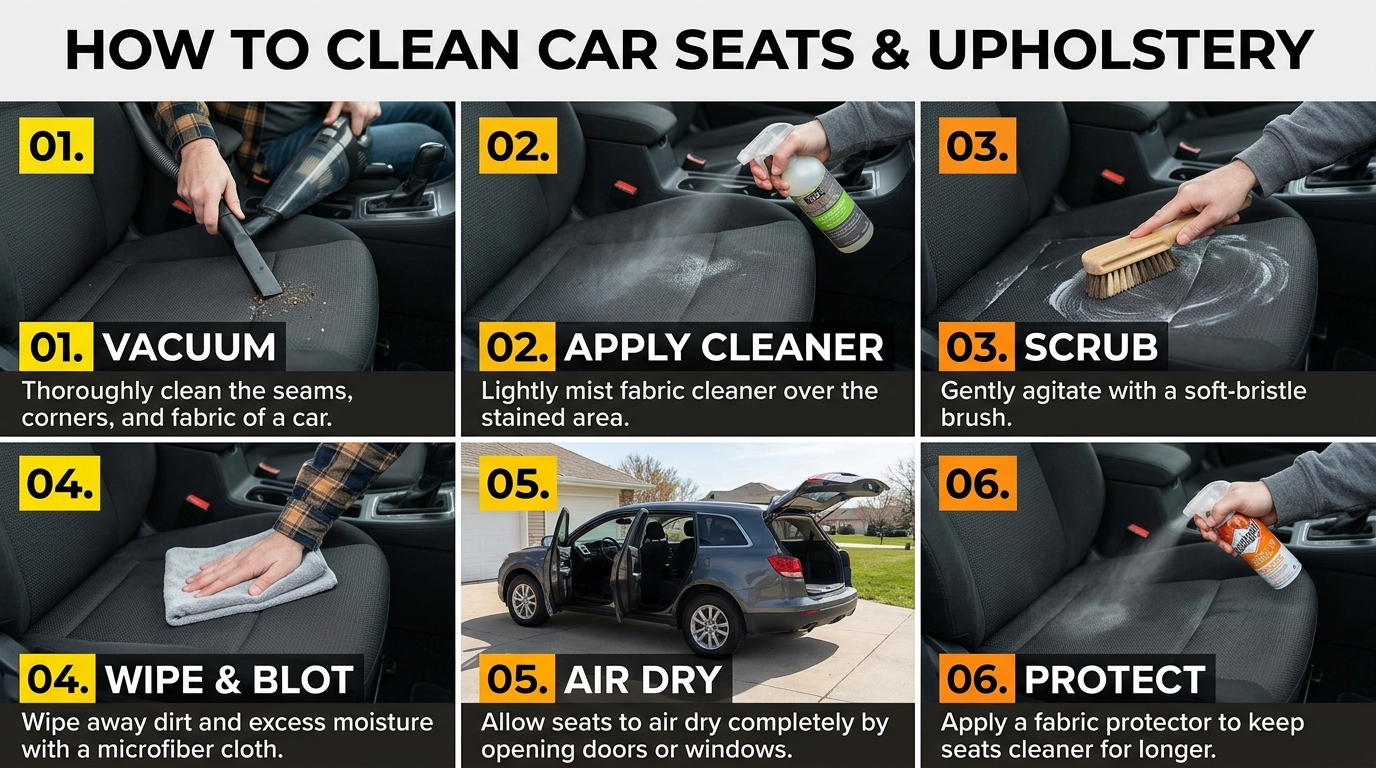
Keeping your car seats and upholstery clean is essential to maintaining a fresh and inviting interior. Not only does a clean interior create a more pleasant driving experience, but it also helps preserve the value of your vehicle. Whether you’re dealing with everyday dirt and spills or tackling tough stains, learning the best cleaning techniques and products can make a world of difference. In this guide, we’ll walk you through some effective methods to clean car seats and upholstery, helping you keep your vehicle looking and feeling like new.
Tools and Materials Needed
Vacuum Cleaner: A powerful vacuum cleaner with various attachments is essential for removing dust, debris, and pet hair from the seats. Make sure the attachments are suitable for upholstery.
Stain Remover: Invest in a high-quality upholstery stain remover to effectively tackle any stains on the seats. Choose a product that is safe for the type of upholstery you have.
Microfiber Cloths: Soft and absorbent microfiber cloths are perfect for wiping down and cleaning the seats without causing damage to the upholstery.
Upholstery Brush: A soft-bristled upholstery brush helps to agitate the cleaning solution and remove dirt from the fabric without causing any abrasions.
Upholstery Cleaner: Opt for a specialized upholstery cleaner that is suitable for the type of material your seats are made of. Avoid using harsh chemicals that can damage the upholstery.
3. Vacuuming the Seats
Vacuuming the seats is an essential step in maintaining the cleanliness of your car’s interior. Before starting, remove any large debris such as food crumbs, dirt, or pet hair by hand. Use a crevice tool to reach into tight spaces between seats and around seatbelts. Start from the top of the seat and work your way down to ensure thorough cleaning.
Make sure to vacuum not only the seat cushions but also the seatbacks and any other upholstered areas in the car. Pay special attention to seams and crevices where dirt and debris tend to accumulate. Regular vacuuming helps prevent dirt buildup, prolongs the life of your upholstery, and creates a more pleasant driving experience for you and your passengers.

4. Removing Stains
Identifying the Stain: Before attempting to remove a stain from upholstery, it is crucial to identify the type of stain you are dealing with. Common stains include food, beverages, ink, blood, and pet stains. Each type requires a specific approach for effective removal.
Stain Removal Techniques: Depending on the type of stain, there are various techniques you can use to remove it from upholstery. For example, for fresh stains, blotting with a clean cloth and applying a mixture of water and mild detergent can be effective. For tougher stains, such as ink or oil-based stains, specialized upholstery cleaners or stain removers may be necessary. Always test any cleaning solution on a small, inconspicuous area first to ensure it does not damage the fabric.
5. Washing the Upholstery
Step 1: Preparation
Before washing the upholstery, vacuum the seats thoroughly to remove any loose dirt and debris. This will help prevent the dirt from spreading and becoming harder to remove during the washing process. Make sure to pay extra attention to the crevices and seams where dirt and crumbs tend to accumulate.
Step 2: Choosing the Right Cleaning Solution
When washing the upholstery, it’s crucial to use a cleaning solution that is safe for the fabric. Always check the manufacturer’s instructions or test the solution on a small, inconspicuous area first to ensure it doesn’t cause any damage or discoloration. You can either purchase a commercial upholstery cleaner or create a DIY solution using mild soap and water.
Drying and Conditioning
Drying: After washing the upholstery, it is crucial to ensure that it is thoroughly dried before using the car again. Leaving the upholstery damp can lead to mold and mildew growth, which can cause unpleasant odors and damage the material. To dry the upholstery, you can use a combination of air drying and a vacuum cleaner. Leave the car windows open to allow air circulation and use a fan to speed up the drying process. You can also use a dry towel to gently pat the upholstery to absorb excess moisture.
Conditioning: To keep the upholstery looking its best and prolong its lifespan, it is recommended to condition it regularly. Conditioning helps to moisturize and protect the material, preventing it from drying out and cracking. Choose a suitable upholstery conditioner based on the material of your car seats, such as leather conditioner for leather upholstery. Apply the conditioner following the manufacturer’s instructions, usually by gently massaging it into the upholstery and allowing it to be absorbed. Regular conditioning will not only maintain the appearance of the upholstery but also provide some level of protection against spills and stains.
Tips for Maintenance
Regular Cleaning: One of the most important tips for maintaining the cleanliness of your car’s upholstery is to clean it regularly. Vacuuming the seats and wiping down surfaces can help prevent the buildup of dirt and grime, keeping your car looking fresh and well-maintained.
Protective Measures: Consider using protective measures such as seat covers or fabric protectors to safeguard your upholstery from spills and stains. These additional layers can help extend the life of your upholstery and make cleaning easier in the long run. Additionally, be mindful of items that could potentially damage the upholstery, such as sharp objects or harsh chemicals.