
Keeping your vehicle’s tires properly inflated is crucial for ensuring optimal performance, safety, and fuel efficiency. In this guide, we will walk you through the steps to check and adjust tire pressure correctly, helping you maintain your tires in top condition for a smooth and worry-free driving experience.
Importance of Correct Tyre Pressure
Correct tyre pressure is crucial for safe driving, optimal performance, and increased longevity of your vehicle’s tires. Maintaining the recommended tyre pressure levels provided by the manufacturer ensures proper traction, stability, and handling on the road. Driving with underinflated or overinflated tires can lead to decreased fuel efficiency, uneven tread wear, reduced braking capabilities, and an overall unsafe driving experience. Incorrect tyre pressure also affects the vehicle’s suspension system and can potentially cause damage to other components of the car.
By regularly checking and adjusting your tyre pressure, you can improve fuel economy, extend the lifespan of your tires, enhance driving comfort, and minimize the risk of accidents. It is a simple yet essential maintenance task that every vehicle owner should prioritize to ensure a smooth and safe driving experience.
3. How to Check Tyre Pressure
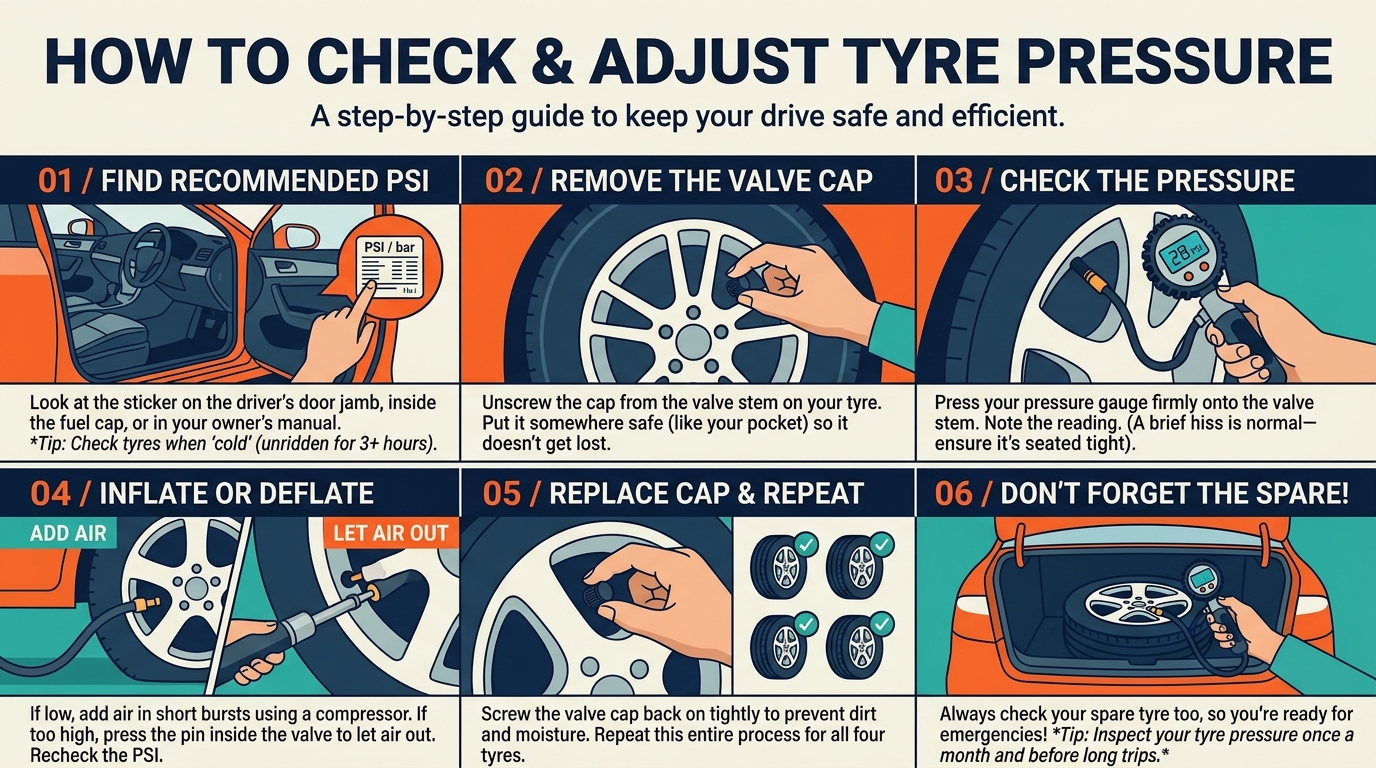
Checking your tyre pressure regularly is crucial for ensuring your safety on the road and maximizing the lifespan of your tyres. To check your tyre pressure, you will need a tyre pressure gauge, which can be either digital or manual. Start by removing the valve cap from the tyre’s valve stem.
Next, firmly press the tyre pressure gauge onto the valve stem to get a reading. Compare the measured pressure to the recommended pressure specified in your vehicle’s manual or on a sticker usually located on the driver’s side door jamb or inside the fuel filler flap. Repeat this process for all four tyres, including the spare if applicable, and adjust the pressure as needed to meet the manufacturer’s recommendations.

4. How to Adjust Tyre Pressure
Adjusting tyre pressure is a straightforward process that can ensure optimal performance and safety on the road. To adjust tyre pressure, start by unscrewing the valve cap on the tyre’s valve stem. Use a tyre pressure gauge to measure the current pressure in the tyre. Compare this reading to the manufacturer’s recommended tyre pressure, which can usually be found in the owner’s manual or on a sticker inside the driver’s side door jamb.
Next, if the tyre pressure is too low, use an air compressor to add more air. Attach the air hose to the valve stem and add air in short bursts while regularly checking the pressure with the gauge until it reaches the correct level. If the tyre pressure is too high, release some air by pressing the small pin in the center of the valve stem. Remember to recheck the pressure after adjusting to ensure it is within the recommended range for safe driving.
Tools Needed for Checking Tyre Pressure
Checking tyre pressure is a simple task that can be done by anyone with the right tools. The primary tool needed is a good quality tyre pressure gauge. This device allows you to measure the air pressure inside your tyres accurately. There are various types of tyre pressure gauges available, including digital and analog options. Digital gauges are known for their precision and ease of use, while analog gauges are more traditional and do not require batteries.
In addition to a tyre pressure gauge, you may also need a small air compressor or access to a gas station with an air pump. An air compressor can be handy for adding air to your tyres if they are underinflated. Some air compressors come with built-in pressure gauges, making them convenient tools for maintaining correct tyre pressure. Keeping these tools in your car or garage can help ensure that your tyres are always properly inflated, improving your vehicle’s performance and safety on the road.
6. Tips for Maintaining Correct Tyre Pressure
Properly maintaining correct tyre pressure is crucial for ensuring optimal performance, safety, and longevity of your tires. One important tip is to check your tyre pressure regularly, at least once a month, using a reliable pressure gauge. This simple task can help you catch any issues early on and prevent potential damage or accidents caused by underinflated or overinflated tires.
Additionally, it’s essential to adjust your tyre pressure according to the manufacturer’s recommendations based on factors such as load, speed, and driving conditions. Overinflated tires can lead to a harsh ride and uneven wear, while underinflated tires can reduce fuel efficiency and increase the risk of blowouts. By following these tips and maintaining correct tyre pressure, you can enhance your driving experience, improve safety on the road, and extend the lifespan of your tires.
Conclusion
Proper tire pressure is essential for safe driving and optimal vehicle performance. By maintaining the correct tire pressure, drivers can ensure better fuel efficiency, longer tire lifespan, improved handling, and overall safety on the road. Regularly checking and adjusting tire pressure according to manufacturer recommendations is a simple yet crucial task that every driver should prioritize.
Remember, underinflated tires can lead to increased fuel consumption, uneven tire wear, reduced traction, and potential blowouts. On the other hand, overinflated tires can cause a harsher ride, reduced grip on the road, and increased risk of damage to the tires. By following the guidelines provided in this guide and staying proactive about tire maintenance, drivers can enjoy a smoother and safer driving experience while also saving money in the long run.