
Are you tired of dealing with a leaking sunroof that leaves your car interior damp and musty? Don’t worry, we’ve got you covered. In this guide, we will walk you through step-by-step instructions on how to fix a leaking sunroof and regain your peace of mind while driving. Say goodbye to soggy seats and hello to a dry and comfortable ride!
Common Causes of Sunroof Leaks
Sunroof leaks can be frustrating and lead to water damage inside your vehicle. Understanding the common causes can help you prevent and address these issues effectively. One common cause is damaged or deteriorated weather stripping around the sunroof. This rubber seal is designed to keep water out, but over time, it can crack or peel, allowing water to seep through.
Another frequent cause is clogged drain tubes. These tubes are responsible for draining water away from the sunroof, but if they become blocked with debris like leaves or dirt, water can back up and leak into the vehicle. Additionally, a misaligned or damaged sunroof glass or frame can also result in leaks. Regular maintenance and inspection can help identify these issues before they lead to significant leaks.
Tools Needed for Sunroof Leak Repair
Repairing a sunroof leak may require specific tools to effectively identify and fix the issue. Some essential tools that you may need for sunroof leak repair include a screwdriver set, sealant or silicone adhesive, cleaning supplies such as glass cleaner and microfiber cloths, a flashlight for better visibility, and a water hose or spray bottle for testing purposes.
A screwdriver set is crucial for removing any trim or panels around the sunroof to access the sealing components. Sealant or silicone adhesive is essential for resealing any gaps or cracks that may be causing the leak. Cleaning supplies are necessary to ensure the sunroof and its surroundings are free from debris and dirt that could interfere with the repair process. A flashlight aids in inspecting hard-to-reach areas and identifying the source of the leak, while a water hose or spray bottle helps simulate rain conditions to test the effectiveness of the repair.

DIY Guide to Fixing a Leaking Sunroof
Fixing a leaking sunroof on your own can save you time and money. Before starting the repair, make sure to identify the source of the leak. Common causes include clogged drainage tubes, damaged seals, or misaligned sunroof glass. Once you have pinpointed the issue, gather the necessary tools such as a screwdriver, sealant, and cleaning supplies.
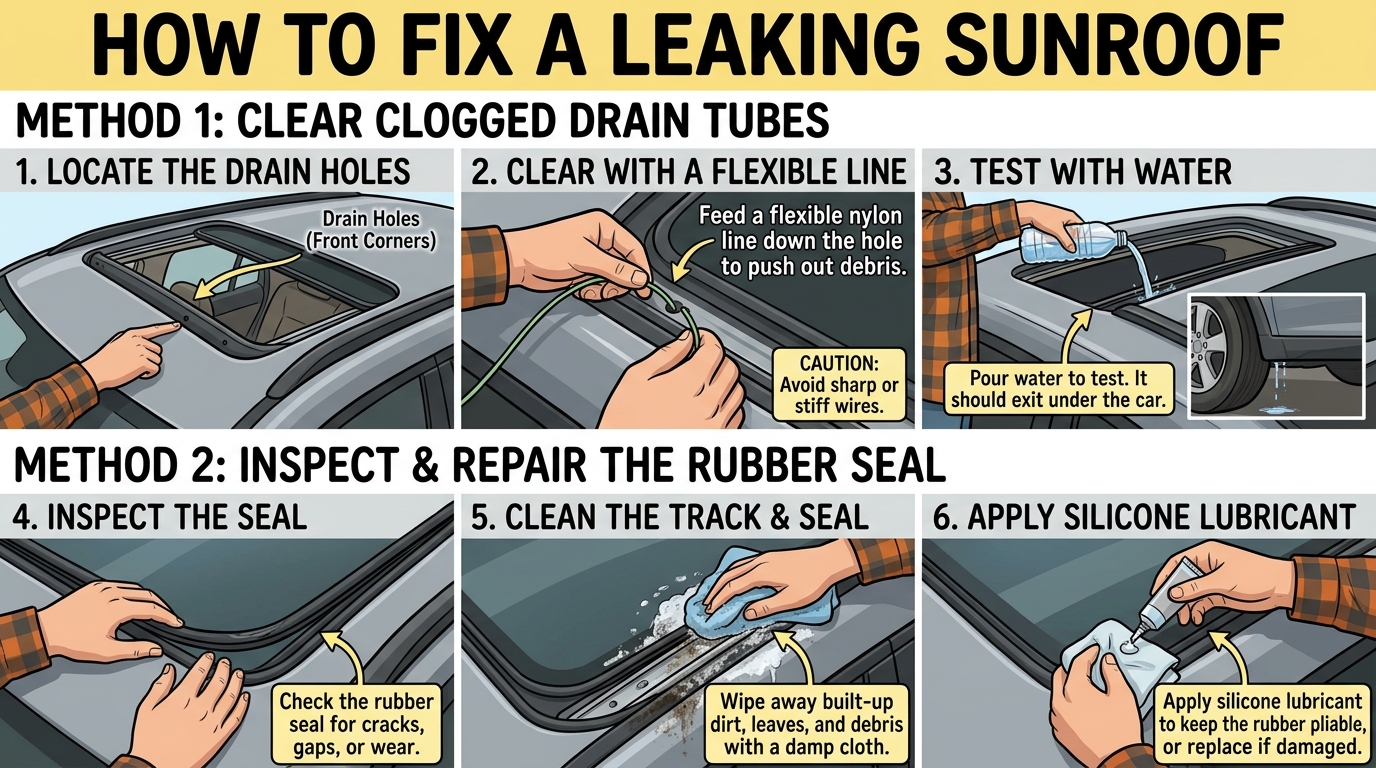
Step 1: Begin by cleaning the area around the sunroof to remove any debris or dirt that could be causing the leak. Use a mild detergent and water to ensure a clean surface for repair.
Step 2: Inspect the drainage tubes for blockages and clear them if necessary. You can use compressed air or a small wire to unclog the tubes and allow proper drainage.
Step 3: Check the seals around the sunroof for any signs of damage or wear. If needed, apply a sealant to create a tight seal and prevent water from seeping in.
Step 4: Test the sunroof for leaks by using a hose to simulate rain. Monitor the interior for any signs of water intrusion and make additional repairs if needed. With these steps, you can effectively fix a leaking sunroof on your own.
Professional Solutions for Sunroof Leak Repair
Professional solutions for sunroof leak repair are often sought when DIY methods fail to resolve the issue. One common professional approach is to conduct a thorough inspection to identify the exact source of the leak. This may involve testing the drainage system, checking for any damaged seals or gaskets, and ensuring that the sunroof is properly aligned.
Once the source of the leak is identified, professionals may use specialized tools and materials to fix the problem. This could include resealing the sunroof, replacing damaged components, or adjusting the alignment to prevent future leaks. Professional solutions are recommended for complex or persistent leaks that require expertise and experience to effectively repair.
Preventing Future Sunroof Leaks
Regular Maintenance: One of the best ways to prevent future sunroof leaks is by maintaining your sunroof regularly. Keep the tracks clean and free from debris, lubricate moving parts as needed, and check the weather seals for any signs of wear or damage. By staying on top of maintenance, you can catch potential issues early and prevent leaks before they happen.
Proper Use: Another important aspect of preventing sunroof leaks is using your sunroof properly. Avoid opening or closing the sunroof when the vehicle is in motion, as this can put unnecessary stress on the seals. Additionally, be mindful of leaving the sunroof open during heavy rain or car washes. Taking these simple precautions can go a long way in keeping your sunroof watertight.
FAQs About Sunroof Leak Repair
Q: How can I tell if my sunroof is leaking?
A: You may notice water stains on the headliner, water dripping inside the vehicle, or dampness in the interior near the sunroof. Additionally, the presence of mold or musty odors could indicate a sunroof leak.
Q: Can I repair a sunroof leak by myself?
A: Yes, you can attempt to repair a sunroof leak yourself, especially if it is caused by clogged drainage tubes or damaged seals. However, if the issue is more complex, it may be best to seek professional assistance to ensure proper repair.
Q: How much does it cost to repair a sunroof leak?
A: The cost of repairing a sunroof leak can vary depending on the cause of the leak and the extent of the damage. DIY repairs may only cost a small amount for materials, while professional repairs could range from a few hundred to over a thousand dollars, depending on the repairs needed.