
Is your car shaking and vibrating when you stop at a red light? Does it feel like the engine is struggling to maintain a smooth idle? If so, you may be experiencing a rough idle. But don’t worry, there are several simple fixes you can try to get your car running smoothly again. Keep reading to learn how to diagnose and solve the issue of a rough idle in your vehicle.
Understanding Rough Idle
Rough idle refers to when a vehicle’s engine vibrates or shakes excessively while the car is stationary and the engine is running. This issue can manifest as a slight shake or a noticeable vibration that can be felt throughout the vehicle. It is often characterized by an inconsistent engine speed or a fluctuation in RPM (revolutions per minute) while the car is at a standstill.
Understanding rough idle is crucial as it can be a symptom of various underlying issues within the engine or other components of the vehicle. Addressing rough idle promptly is essential to prevent further damage to the engine and ensure smooth operation of the vehicle. By diagnosing the root cause of rough idle, drivers can take appropriate steps to resolve the issue and maintain the performance and efficiency of their vehicle.
Common Causes of Rough Idle
Vacuum Leaks: One common cause of rough idle is vacuum leaks. These leaks can occur in various places such as the intake manifold, vacuum hoses, or even the brake booster. When there is a vacuum leak, the engine may receive too much air, disrupting the air-fuel mixture and leading to a rough idle.
Faulty Spark Plugs: Another culprit for rough idle is faulty spark plugs. Spark plugs play a crucial role in igniting the air-fuel mixture in the combustion chamber. If the spark plugs are worn out or dirty, they may not be able to ignite the mixture properly, causing the engine to idle roughly.
Fuel System Issues: Problems with the fuel system, such as a clogged fuel filter or a malfunctioning fuel injector, can also result in rough idle. Insufficient fuel delivery or improper fuel atomization can lead to an unstable idle speed and performance issues.
Engine Misfires: Engine misfires, which can be caused by various factors like faulty ignition components or low compression, can contribute to rough idle. When cylinders misfire, the engine’s balance is disrupted, causing it to run unevenly and produce a rough idle sensation.

4. Diagnosing the Issue
Diagnosing rough idle issues requires a systematic approach to pinpoint the root cause. Begin by checking for any error codes stored in the vehicle’s computer system using an OBD-II scanner. These codes can provide valuable insights into potential issues with the engine or related components. Next, visually inspect the engine bay for any signs of visible damage, such as worn-out spark plugs, damaged wires, or leaking hoses.
Performing a thorough inspection of the air intake system, fuel system, and ignition system can help identify potential areas of concern. Additionally, conducting a compression test can reveal any underlying issues with the engine’s internal components. By methodically inspecting these key areas and utilizing diagnostic tools, you can effectively diagnose the cause of rough idle and proceed with the necessary repairs.
Steps to Fix a Rough Idle
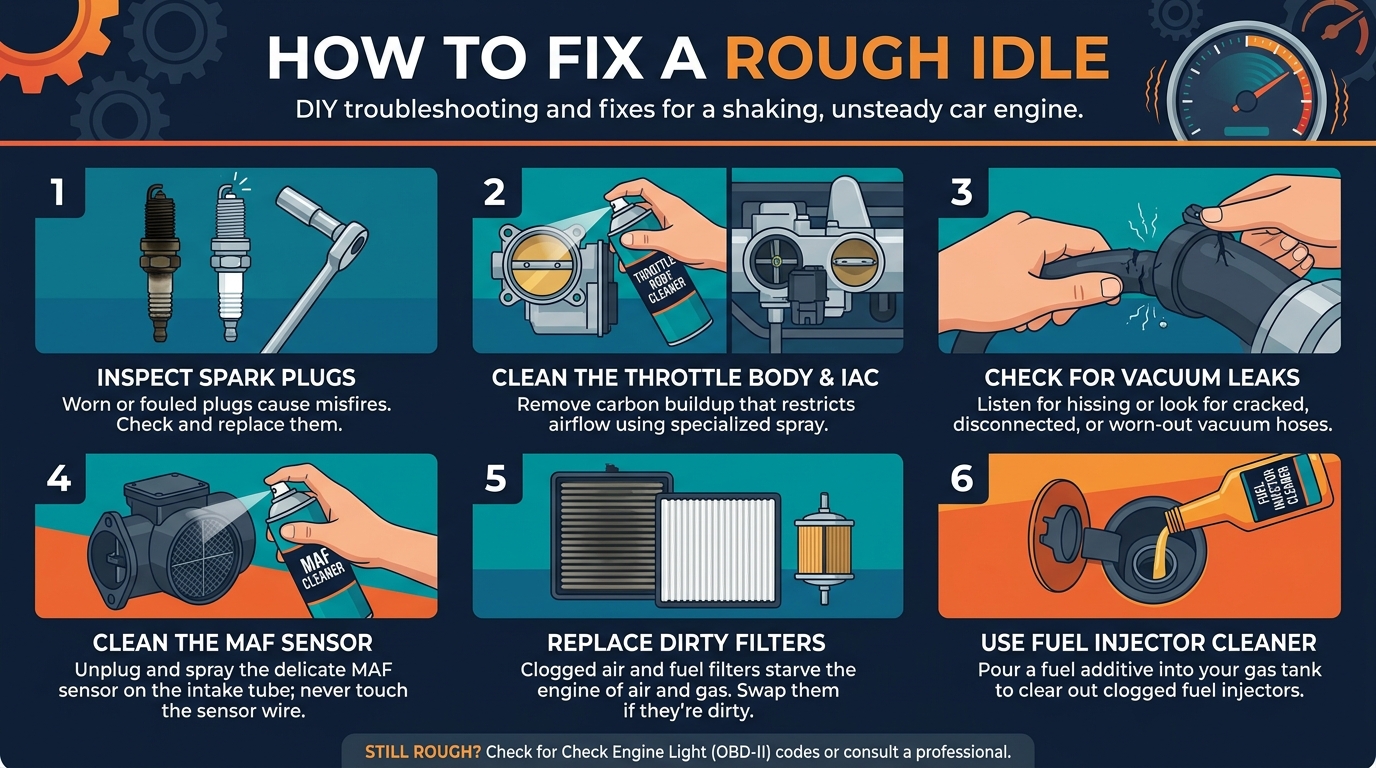
1. Check the Spark Plugs: One of the common causes of rough idle is faulty spark plugs. Inspect the spark plugs for signs of wear or deposits. Replace any spark plugs that show wear or damage to ensure a consistent spark for smooth engine operation.
2. Clean or Replace the Air Filter: A dirty or clogged air filter can restrict airflow to the engine, leading to a rough idle. Remove the air filter and inspect it for dirt and debris. Clean the filter if it’s reusable, or replace it if it’s too dirty. This simple maintenance task can improve engine performance.
3. Check the Fuel System: A malfunctioning fuel system can also cause rough idling. Ensure that the fuel filter is clean and unclogged. Check for any fuel leaks or issues with the fuel injectors. Addressing fuel system problems can help restore smooth idling.
4. Inspect the Idle Air Control Valve (IACV): The IACV controls the idle speed of the engine. If it malfunctions, it can cause rough idling. Check the IACV for any dirt or carbon buildup that may be affecting its operation. Cleaning or replacing the IACV can often resolve idle issues.
5. Perform a Throttle Body Cleaning: Over time, the throttle body can accumulate carbon deposits that interfere with airflow and idle control. Remove the throttle body and clean it thoroughly using a recommended cleaner. A clean throttle body can help improve idle quality and overall engine performance.
Preventing Rough Idle
Regular Maintenance: One of the best ways to prevent rough idle is by keeping up with regular maintenance on your vehicle. This includes changing the air filter, spark plugs, and fuel filter as recommended by the manufacturer. Regular oil changes and tune-ups can also help keep your engine running smoothly and prevent rough idle issues.
Quality Fuel: Using high-quality fuel can also help prevent rough idle. Low-quality or contaminated fuel can lead to clogged fuel injectors or a dirty fuel system, causing your engine to run rough. By using reputable gas stations and avoiding old or contaminated fuel, you can reduce the risk of rough idle problems.
Conclusion
Rough idle can be a frustrating issue to deal with, but with proper diagnosis and maintenance, it can be resolved effectively. By understanding the common causes of rough idle and following the necessary steps to fix it, you can ensure that your vehicle runs smoothly and efficiently. Remember that regular maintenance checks, such as cleaning or replacing air filters, fuel filters, and spark plugs, can go a long way in preventing rough idle issues.
Additionally, paying attention to warning signs like engine misfires, stalling, or unusual noises can help you catch potential problems early on and prevent them from escalating. It’s crucial to address any rough idle issues promptly to avoid further damage to your vehicle and maintain its performance and longevity. By staying proactive and attentive to your vehicle’s needs, you can keep rough idle at bay and enjoy a smooth driving experience.