
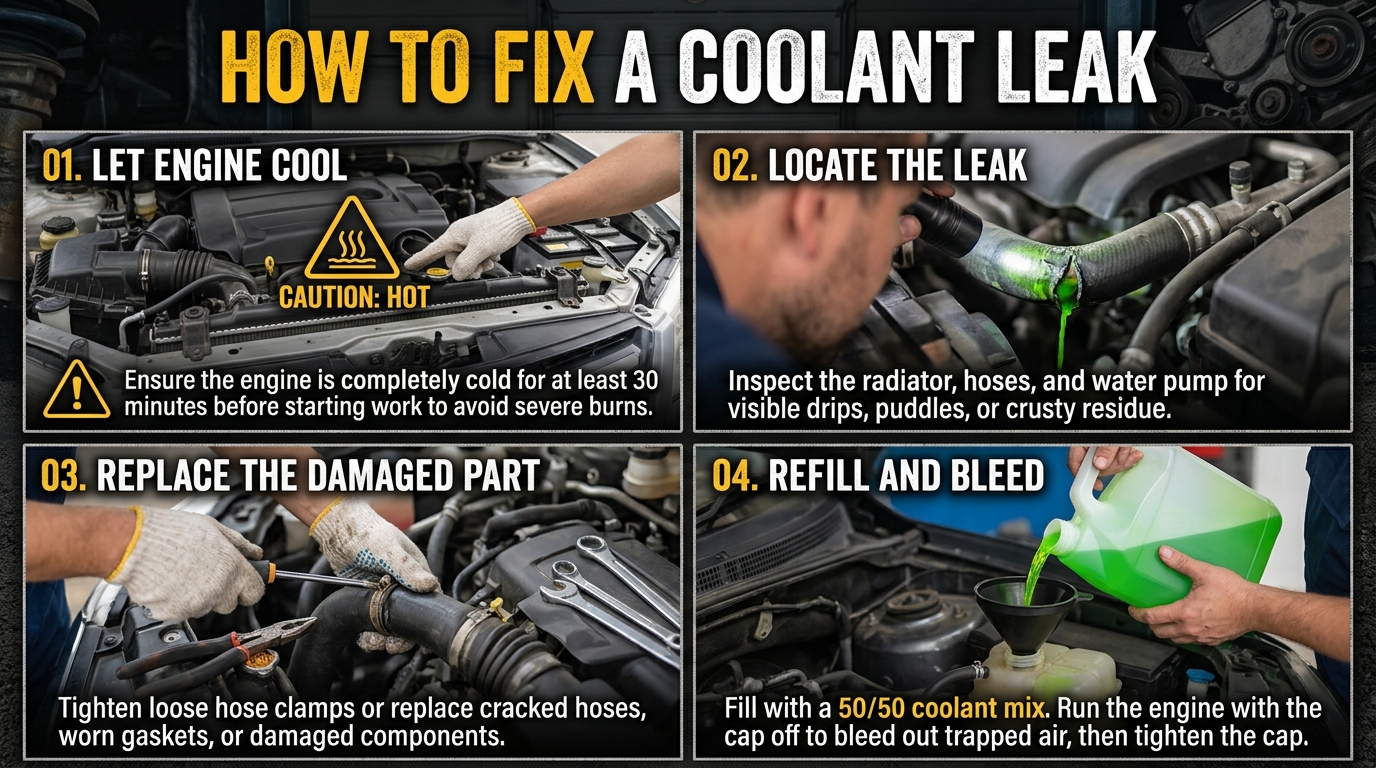
Are you tired of dealing with a pesky coolant leak in your vehicle? Don’t worry, we’ve got you covered! In this post, we will provide you with simple and effective steps to help you fix that coolant leak once and for all. Say goodbye to those constant worries about your car’s engine overheating – let’s get started on solving this issue together.
Symptoms of Coolant Leak
Coolant leaks in a vehicle can lead to serious issues if not addressed promptly. One of the most common signs of a coolant leak is an overheating engine. If you notice your temperature gauge running higher than normal or steam coming from under the hood, it could be a sign of a coolant leak. Another symptom to watch out for is a sweet smell inside or outside the vehicle, which is often the smell of coolant.
Additionally, a visible puddle of bright-colored liquid (usually green, orange, or pink) underneath your parked car is a clear indicator of a coolant leak. Low coolant levels in the reservoir tank or the need to frequently top up the coolant are also signs that there may be a leak somewhere in the cooling system. Ignoring these symptoms can lead to engine damage, so it’s crucial to address coolant leaks promptly.
Identifying the Source of the Leak
Visual Inspection: One of the primary methods to identify the source of a coolant leak is through a visual inspection of the engine bay. Look for any signs of coolant pooling under the vehicle or on the engine components. Check for wet spots, especially around hoses, connections, the radiator, water pump, and the coolant reservoir.
Pressure Test: Another effective way to pinpoint the location of a coolant leak is by conducting a pressure test. This test involves pressurizing the cooling system with a specialized tool to simulate operating conditions. By pressurizing the system, any leaks will become more apparent, allowing you to identify the source accurately.
Repairing a Coolant Leak
Repairing a coolant leak is essential to prevent engine overheating and potential damage. The first step is to identify the source of the leak, whether it’s a damaged hose, radiator, water pump, or gasket. Once the source is determined, the appropriate repair can be made.
Common methods for repairing a coolant leak include replacing damaged hoses or gaskets, repairing cracks in the radiator, or fixing a faulty water pump. It’s crucial to use the correct parts and follow manufacturer guidelines to ensure a proper repair. After the repair is completed, it’s important to refill the cooling system with the appropriate coolant and check for any additional leaks. Regular maintenance and inspections can help prevent future coolant leaks and ensure the proper functioning of the vehicle’s cooling system.
5. Preventing Future Leaks
Regular Maintenance: One of the most effective ways to prevent future coolant leaks is to follow a regular maintenance schedule for your vehicle. This includes checking coolant levels, inspecting hoses and connections, and addressing any issues promptly to prevent them from escalating into leaks.
Use High-Quality Coolant: Using high-quality coolant recommended by your vehicle manufacturer can also help prevent leaks. Quality coolant is less likely to break down over time, reducing the risk of leaks occurring due to deterioration of the coolant itself.
Proper Installation: When replacing coolant, hoses, or other components, ensure they are installed correctly according to the manufacturer’s specifications. Improper installation can lead to leaks and other issues, so it’s essential to follow guidelines carefully.
6. Conclusion
Concluding Thoughts on Coolant Leaks: In conclusion, addressing coolant leaks promptly is crucial to maintaining the health and performance of your vehicle’s cooling system. By understanding the symptoms, identifying the source of the leak, and taking appropriate repair measures, you can prevent further damage and avoid potential overheating issues. Regularly checking your coolant levels and performing routine maintenance can help in early detection of leaks and save you from costly repairs down the road.
Final Note: Remember that coolant leaks are common in vehicles and can occur due to various reasons such as worn-out hoses, a damaged radiator, or a faulty gasket. It is essential to act quickly upon noticing any signs of a coolant leak to prevent engine damage and ensure the longevity of your vehicle. By following the steps outlined in this guide and staying proactive in your vehicle’s maintenance, you can effectively manage coolant leaks and keep your car running smoothly.
Additional Resources
1. Online Forums: Joining online car enthusiast forums can be a valuable resource for troubleshooting coolant leaks. Members often share their experiences and provide step-by-step guides on diagnosing and fixing common coolant leak issues.
2. Manufacturer’s Manual: Referencing your vehicle’s manufacturer manual is crucial for understanding the specific cooling system components and recommended maintenance procedures. It can help you identify potential causes of coolant leaks and provide guidance on how to address them.
3. Professional Mechanics: When in doubt or if you lack the necessary tools and expertise, seeking help from a professional mechanic is advisable. They can accurately diagnose and repair coolant leaks, ensuring your vehicle’s cooling system functions optimally.