
Have you ever wondered if your tires are safe to drive on? Checking your tire tread depth is crucial for maintaining optimal safety on the road. In this guide, we will show you how to easily check your tire tread depth at home, ensuring peace of mind and confidence in your vehicle’s performance.
Importance of Checking Tyre Tread Depth
Checking tyre tread depth is crucial for maintaining safe driving conditions and maximizing the lifespan of your tyres. The tread on your tyres provides the necessary traction to grip the road surface, especially in wet or slippery conditions. As tyres wear down, the depth of the tread decreases, leading to reduced grip and increased braking distances. This can significantly impact your vehicle’s handling and safety on the road.
Regularly monitoring and maintaining proper tyre tread depth can help prevent accidents and ensure optimal performance of your vehicle. By checking tyre tread depth, you can also identify any potential issues with wheel alignment or tyre pressure, allowing you to address them promptly and avoid further damage or safety risks.
Tools Needed for Checking Tyre Tread Depth
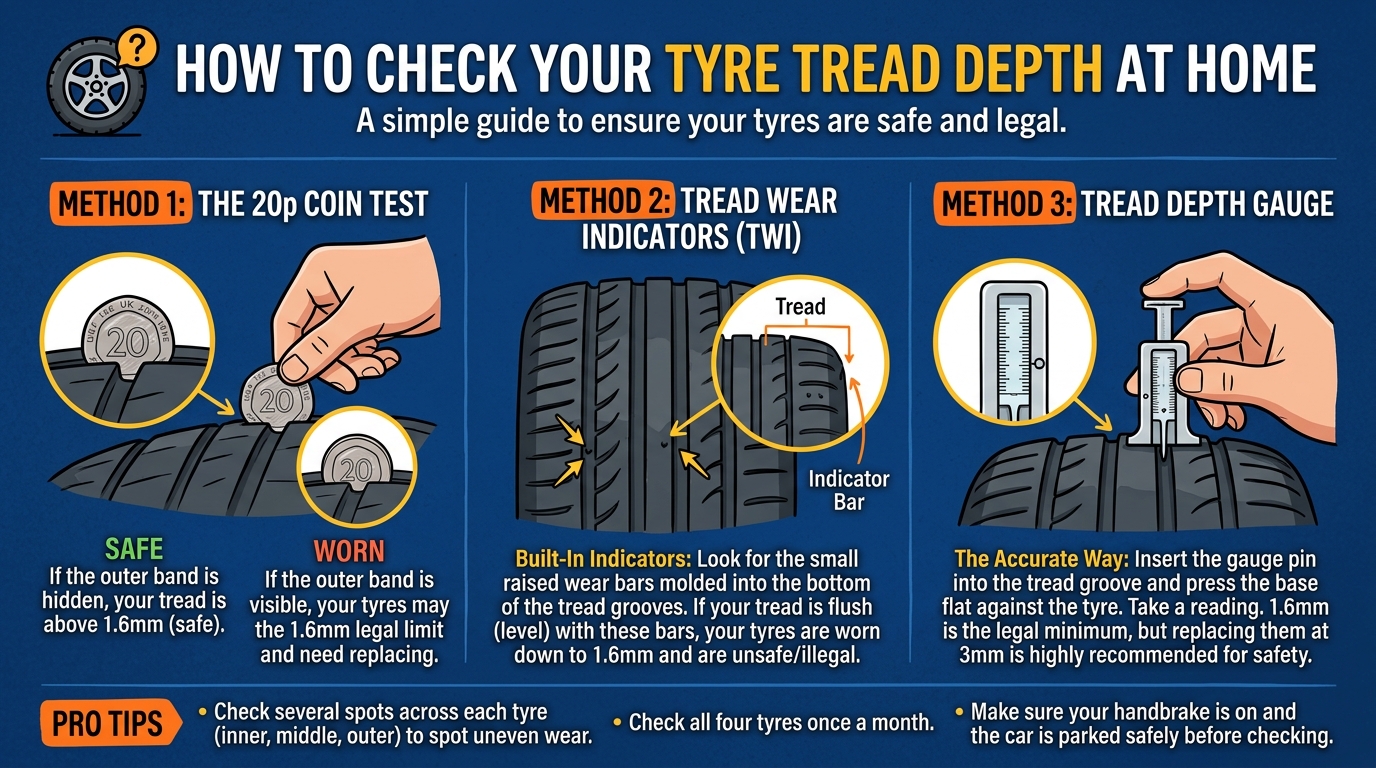
Checking tyre tread depth is an essential part of maintaining road safety. To effectively measure tyre tread depth, you will need a few basic tools. The primary tool is a tread depth gauge, a simple device designed to measure the depth of the tread on a tyre. Tread depth gauges are affordable and widely available at automotive stores or online. They typically have a probe that is inserted into the tread grooves to provide an accurate measurement.
In addition to a tread depth gauge, a coin can also be used as a quick and simple method to check tyre tread depth. Insert a coin into the tread grooves with the Queen’s head facing down. If the tread covers part of the head, the tyre tread depth is likely sufficient. However, if the tread does not reach the top of the head, it may be time to consider replacing the tyre. These tools, when used correctly, can help you monitor the condition of your tyres and ensure safe driving experiences.

Step-by-Step Guide to Checking Tyre Tread Depth
Checking tyre tread depth is a crucial aspect of vehicle maintenance to ensure optimal safety on the road. Follow these simple steps to accurately assess the condition of your tyres. Start by locating the tread wear indicators on your tyres. These indicators are small bars that run perpendicular to the tread grooves, signaling the minimum allowable tread depth. Use a tread depth gauge or a coin to measure the depth of the tread. Insert the gauge into the tread grooves and take the measurement at several points across the tyre to ensure accuracy.
Alternatively, you can use a coin as a quick and easy way to check tread depth. Place a penny or a quarter upside down into the tread grooves with Lincoln’s or Washington’s head facing you. If the top of their head is visible, the tread is too worn and needs replacement. Regularly monitoring and maintaining adequate tyre tread depth is essential for proper traction, handling, and overall road safety.
Signs of Worn Tyre Treads
Recognizing signs of worn tyre treads is crucial to ensure your safety on the road. One of the most common indicators is the depth of the tire tread reaching the minimum legal limit. You can easily check this using a tread depth gauge or by looking for wear indicators on the tire itself. Additionally, uneven wear patterns on the tire surface can also signal that it’s time for a replacement. Be on the lookout for any bulges, cracks, or cuts in the tire, as they can compromise the structural integrity of the tyre and increase the risk of a blowout.
Another sign of worn tyre treads is reduced traction on wet or slippery surfaces. If you notice that your vehicle is taking longer to stop or is slipping more easily, it could be due to worn treads. This reduced grip can significantly impact your ability to control the vehicle in hazardous conditions. Don’t ignore these warning signs, as they could lead to dangerous situations on the road. Regularly inspecting your tyre treads and being aware of these signs can help you stay safe and prevent accidents caused by worn-out tires.
Tips for Maintaining Safe Tyre Tread Depth
Regular Inspections: One of the most important tips for maintaining safe tyre tread depth is to conduct regular inspections. Check your tyres at least once a month for signs of wear and tear. Look for any bald spots, uneven wear, or objects stuck in the tread that could affect performance.
Proper Inflation: Keeping your tyres properly inflated is crucial for maintaining safe tread depth. Underinflated tyres can wear out more quickly and unevenly, leading to decreased tread depth. Be sure to check your tyre pressure regularly and inflate them to the manufacturer’s recommended levels.
Rotate Your Tyres: To ensure even wear on all your tyres, it’s important to rotate them regularly. This helps prevent one tyre from wearing out faster than the others and ensures that your tread depth remains consistent across all four tyres.
Conclusion
Ensuring proper tyre tread depth is essential for maintaining road safety and vehicle performance. By regularly checking and maintaining adequate tread depth, drivers can reduce the risk of accidents, improve traction on wet and slippery roads, and prolong the lifespan of their tyres. Remember that worn tyre treads can lead to decreased handling, longer braking distances, and increased chances of hydroplaning.
Make it a habit to inspect your tyres for wear and tear, and replace them when necessary to stay safe on the road. Following the step-by-step guide and using the appropriate tools for checking tyre tread depth can help you monitor the condition of your tyres effectively. By staying proactive and vigilant about tyre maintenance, you can ensure a smoother and safer driving experience for yourself and others on the road.