
Checking your power steering fluid is a quick and easy task that can help ensure the smooth operation of your vehicle. Proper maintenance of your power steering system is essential for safe and efficient driving. In this post, we will guide you through the simple steps to check your power steering fluid levels and provide you with valuable tips to keep your vehicle running smoothly.
Importance of Power Steering Fluid
Power steering fluid is a critical component in ensuring smooth and efficient steering in a vehicle. It serves as a hydraulic fluid that helps in the proper functioning of the power steering system by transmitting power from the steering wheel to the steering mechanism. Without an adequate amount of power steering fluid, the steering system can become stiff and difficult to operate, leading to potential safety hazards on the road.
Regularly checking and maintaining the proper level of power steering fluid is essential to prevent damage to the power steering pump and other components of the steering system. Over time, power steering fluid can break down and accumulate contaminants, reducing its effectiveness. By ensuring that the power steering fluid is at the correct level and in good condition, you can prolong the lifespan of your vehicle’s steering system and maintain optimal performance.
3. Signs of Low Power Steering Fluid
Difficulty Steering: One of the most common signs of low power steering fluid is difficulty in steering. When the fluid level is low, there may not be enough hydraulic pressure to assist in turning the steering wheel, making it feel heavy and hard to maneuver.
Whining or Groaning Noise: Another indication of low power steering fluid is a whining or groaning noise when you turn the steering wheel. This noise is caused by air bubbles or lack of lubrication in the system due to insufficient fluid. It is important not to ignore this noise, as it could lead to damage to the power steering components if left unattended.

4. How to Locate the Power Steering Fluid Reservoir
Locating the power steering fluid reservoir in your vehicle is crucial for proper maintenance. In most cars, the power steering fluid reservoir is typically located near the engine, often on the passenger side. It is a small plastic or metal container with a cap that is usually labeled with a steering wheel icon or the words “Power Steering Fluid.”
To easily identify the power steering fluid reservoir, you can refer to your vehicle’s owner’s manual for specific instructions and diagrams. Additionally, you can visually inspect the engine bay for a container that is connected to the power steering pump by hoses. Keep in mind that the location may vary depending on the make and model of your vehicle, so it’s essential to consult the manual for accuracy.
Steps to Check Power Steering Fluid Level
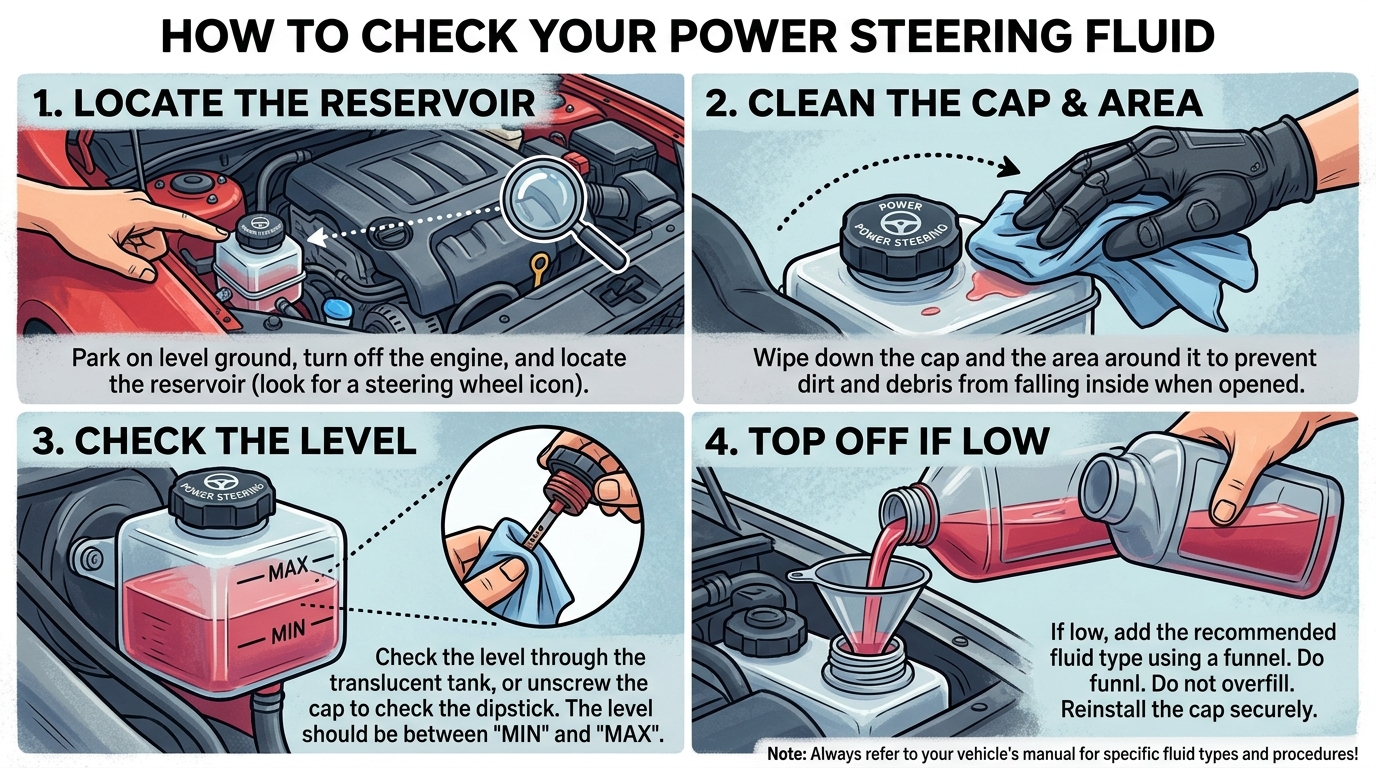
Step 1: Park the vehicle on a level surface and ensure the engine is off. This will prevent any accidents while checking the power steering fluid level.
Step 2: Locate the power steering fluid reservoir under the hood of the car. The reservoir is typically a small plastic or metal container with a cap labeled with a steering wheel icon.
Step 3: Clean the reservoir cap and the area around it to prevent any dirt or debris from falling into the reservoir when you open it. This will help maintain the cleanliness of the power steering fluid.
Step 4: Remove the cap from the reservoir and use a dipstick or the markings on the side of the reservoir to check the fluid level. The level should be between the “Min” and “Max” markings.
Step 5: If the fluid level is below the “Min” marking, it’s time to add more power steering fluid. Use the appropriate type of fluid recommended by the vehicle manufacturer to top up the reservoir to the correct level.
6. When to Add or Replace Power Steering Fluid
Regular Maintenance: It is recommended to check the power steering fluid level regularly, typically during routine oil changes. This helps ensure that the power steering system functions properly and prevents any potential issues due to low fluid levels.
Signs of Contamination: If the power steering fluid appears dark or dirty, it may be contaminated with debris or metal particles. In such cases, it is advisable to replace the fluid to prevent damage to the power steering system components.
Conclusion
Power steering fluid is a critical component of a vehicle’s power steering system, responsible for ensuring smooth and responsive steering performance. Regularly checking and maintaining the proper level of power steering fluid can help prevent damage to the power steering pump and other components of the system. By following the steps outlined in this guide, you can easily monitor the power steering fluid level and address any issues promptly.
Remember that low power steering fluid can lead to difficulty steering, strange noises when turning the wheel, and potential damage to the power steering system. It is essential to address any leaks or low fluid levels promptly to avoid more significant issues down the line. Keeping up with routine maintenance of your power steering fluid will help ensure a safe and enjoyable driving experience.